
Xiaomi’s Buds lineup has really become a popular choice for those who want solid wireless earbuds without spending a fortune.
The Xiaomi Buds 5 were already a great option, featuring an open-style design, active noise cancellation, and support for high-quality wireless audio.
Now, Xiaomi has launched the Buds 6, which, on the surface, seem like a pretty minor upgrade. The charging case looks nearly identical, the battery life still isn’t the best, and many connectivity features haven’t changed.
However, there are some noteworthy improvements under the hood. Xiaomi has enhanced the microphones, upgraded the audio hardware, and added a few handy features to the companion app.
So, just how much of an upgrade are the Xiaomi Buds 6 compared to the Buds 5? And if you’re already rocking the older model, is it worth making the switch?
Let’s take a closer look at both models.
Also see: Xiaomi Buds 5 Pro vs Buds 5 Pro Wi-Fi: What’s the Difference?
Pricing
The Xiaomi Buds 5 originally launched at around $99. By the time the newer model arrived, the older earbuds could often be found for around $70.
The Buds 6 launched at $119.99, although their street price can be below €100 depending on the retailer and current discounts.
That means the actual difference can be around $30.
At the full launch price, the Buds 6 are clearly more expensive. But if you find them for under $100, the newer model becomes much easier to recommend.
The question is whether the extra money buys enough improvement.
Where to Buy?
Xiaomi Buds 6: View on AliExpress
Xiaomi Buds 5: View on AliExpress
Look & Feel
The first thing you notice is how similar these two earbuds are.
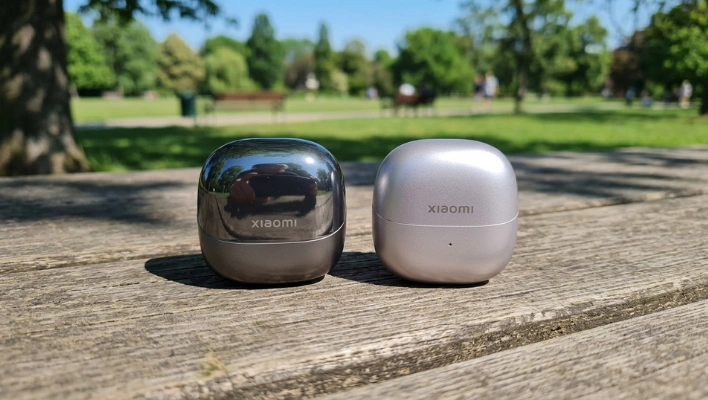
The charging cases are almost identical in both models. Both use a compact rounded case with the Xiaomi logo on the front, a status LED and a USB-C port on the bottom. The pairing button is also placed in the same area.
There is very little to separate the two cases in terms of size or overall shape. If you put them next to each other, it would be easy to mistake one for the other.
The earbuds themselves are also based on the same general design. Both use a semi-in-ear shape rather than the sealed in-ear design found on many competing earbuds.
There is, however, a small change to the stem.
The Buds 5 have the Xiaomi branding on the stem, while the Buds 6 use that space differently. Xiaomi has added microphone hardware around this area, helping the newer model improve both noise cancellation and voice pickup.
The part of the earbud that sits inside the ear has not changed much, though. As a result, the overall comfort is very similar between the two.
Whether you find this design comfortable will depend heavily on your ears. Semi-in-ear earbuds can feel great for some people but may not stay completely secure during exercise.
That can be an issue with both models. They are fine for normal daily use, but people who run or do intense workouts may prefer earbuds with silicone ear tips or additional support.
Both models also have wear detection, so playback can automatically pause when you remove an earbud.
Controls are handled through the stem. You can press the stem to control playback and other functions, while sliding your finger up or down can be used to adjust the volume.
Both earbuds also carry an IP54 rating, which gives them protection against dust and water splashes. That makes them suitable for everyday workouts, although they are not designed to be submerged in water.
Connectivity and Features
The good news is that Xiaomi did not cut corners with wireless connectivity.
Both models support Bluetooth 5.4 and Qualcomm aptX Lossless, with support for up to 24-bit/48kHz audio. They also carry Hi-Res Audio Wireless certification.
In everyday use, the connection is reliable on both pairs.
There are no major differences in basic wireless performance, and both earbuds maintain a stable connection while listening to music or watching videos.

Google Fast Pair is supported as well, making the initial connection with compatible Android devices quick and simple.
Gaming performance is another area where both earbuds perform well. Latency is low enough that the delay between what happens on screen and what you hear is barely noticeable in normal use.
That makes either pair a decent choice for casual mobile gaming.
Xiaomi Earbuds App
The Xiaomi Earbuds app gives you control over many of the important features on both models.
You can change the stem controls, adjust noise cancellation settings, update the firmware and select different sound modes.
Both models also include built-in audio recording functionality, allowing the earbuds to record short voice notes through their microphones.
However, the Buds 6 get a couple of useful extras.
The biggest addition is a proper custom equalizer.
The Buds 5 offer preset sound profiles, but they do not give you the same level of manual control. With the Buds 6, you can adjust different frequency ranges yourself and create a sound profile that better matches your taste.
The second major addition is device-finding support.
The Buds 6 work with both Apple’s Find My network and Google’s Find My Device ecosystem. That is a useful feature for anyone who regularly misplaces their earbuds.
The Buds 5 do not offer the same cross-platform finding support.
These aren’t features that will completely change the listening experience, but they make the newer model more convenient to live with.
Microphone Quality Is a Big Upgrade
This is one of the clearest improvements with the Xiaomi Buds 6.
The Buds 5 can deliver acceptable call quality in quiet environments, but microphone performance becomes less impressive when there is a lot of background noise.
Voices can lose clarity, and the earbuds don’t always do a great job separating your voice from everything happening around you.
Xiaomi has addressed that weakness with the Buds 6.
The additional microphone hardware and improved processing make a noticeable difference during calls. Voices sound clearer, and the earbuds are better at dealing with noisy surroundings.
For people who regularly take phone calls using their earbuds, this is one of the strongest reasons to choose the Buds 6.
It is a more meaningful upgrade than some of the smaller changes elsewhere.
Active Noise Cancellation
Both models offer active noise cancellation, but expectations need to be realistic because of the design.
The Buds 5 and Buds 6 are semi-in-ear earbuds. They do not create the same physical seal as traditional in-ear earbuds with silicone tips.
That makes it much harder for them to block outside noise.
Still, the ANC performance is respectable considering the design, and the Buds 6 perform better than the Buds 5.
The newer model provides a stronger reduction in background noise, making it easier to focus on music in places such as offices, cafes and public transport.
But if maximum isolation is what you want, neither should be your first choice.
A good pair of sealed in-ear earbuds will generally block significantly more outside sound simply because the ear tips create a physical barrier.
The advantage of the Xiaomi Buds 6 and Buds 5 is comfort and awareness rather than maximum isolation.
Sound Quality
Sound quality is where the biggest difference between these two generations becomes noticeable.
The Xiaomi Buds 5 use a dual-magnetic driver setup, with the sound tuned in collaboration with Harman AudioEFX.
They sound good and were already capable of delivering a pleasant listening experience.
But the Buds 6 take the hardware a step further.
Xiaomi uses an 11mm driver with a gold-plated diaphragm and a stated frequency response of 16Hz to 40kHz.
Numbers alone do not guarantee better sound, but the difference is noticeable when listening to both models.

The Buds 6 produce stronger and more controlled bass. Low frequencies have more impact without completely taking over the rest of the sound.
The midrange is also more present, giving vocals and instruments a clearer position in the mix.
Overall, the Buds 6 sound more direct and detailed.
The Buds 5 are still enjoyable, but their presentation is not quite as refined. Compared directly with the newer model, they can sound a little less engaging, especially when listening to tracks with strong bass or lots of detail.
The Buds 6 also have the advantage of the custom EQ in the Xiaomi app.
That means you can leave the default tuning alone if you like it, or adjust the sound yourself.
For most listeners, the default tuning should already be good enough. There is no need to spend time changing every frequency unless you have a particular preference.
Battery Life
Battery life is one area where the Xiaomi Buds 6 fail to make a meaningful improvement.
Both earbuds use a 35mAh battery in each earbud. The charging case is rated at 480mAh on the Buds 5, while the Buds 6 use a slightly smaller 475mAh battery.
In real-world terms, that difference is basically irrelevant.
With active noise cancellation turned on, battery life is around three hours per charge under heavier use. At lower volume levels, you can stretch that figure closer to three and a half or even four hours in some situations.
Turning ANC off should give you some additional listening time, but neither model is particularly impressive compared with many newer wireless earbuds.
For a premium pair of earbuds, around three to four hours with ANC enabled feels short. Five to six hours would have made both models much more competitive.
Charging is also unchanged.
Both the Buds 5 and Buds 6 charge through USB-C, and neither model supports wireless charging. Considering the Buds 6 launched at a higher price, wireless charging would have been a welcome addition.
So if battery life is one of your biggest priorities, the Buds 6 are not a major upgrade over the Buds 5.
Xiaomi Buds 6 vs Buds 5: Specs Compared
| Feature | Xiaomi Buds 6 | Xiaomi Buds 5 |
|---|---|---|
| Design | Semi-in-ear | Semi-in-ear |
| Bluetooth | Bluetooth 5.4 | Bluetooth 5.4 |
| Audio codec | Qualcomm aptX Lossless | Qualcomm aptX Lossless |
| Hi-Res Audio | Yes | Yes |
| Driver | 11mm gold-plated diaphragm | Dual-magnetic driver |
| Active Noise Cancellation | Yes | Yes |
| Custom EQ | Yes | No |
| Google Fast Pair | Yes | Yes |
| Earbud battery | 35mAh | 35mAh |
| Case battery | 475mAh | 480mAh |
| Charging | USB-C | USB-C |
| Wireless charging | No | No |
| Water/dust resistance | IP54 | IP54 |
Which Should You Buy?
If you are buying your first pair, the Xiaomi Buds 6 are the better overall choice.
They have better sound quality, stronger microphone performance, improved ANC, a custom EQ and better device-finding support.
The basic experience is still very similar to the Buds 5, but the improvements are in areas that actually matter during everyday use.
The Buds 5, however, become very interesting if you find them at a big discount.
At around $70, they remain a good option for someone who wants comfortable semi-in-ear earbuds with good connectivity, decent sound and ANC without spending much money.
The situation is different if you already own the Buds 5.
In that case, I would not say you need to upgrade immediately.
The Buds 6 are better, but they do not completely reinvent the product. The design is almost the same, battery life has barely changed and connectivity is largely identical.
The upgrade makes the most sense if you care about better sound, make lots of calls or want features such as the improved finding support and custom EQ.

Nick, the Co-founder of Earbuds Arena, is a seasoned freelance tech journalist with over ten years of experience covering wearables, apps, headphones, and gadgets. When he’s not immersed in the tech world, you’ll likely find him unwinding with video games, going for a run, or enjoying a game of soccer on the field.