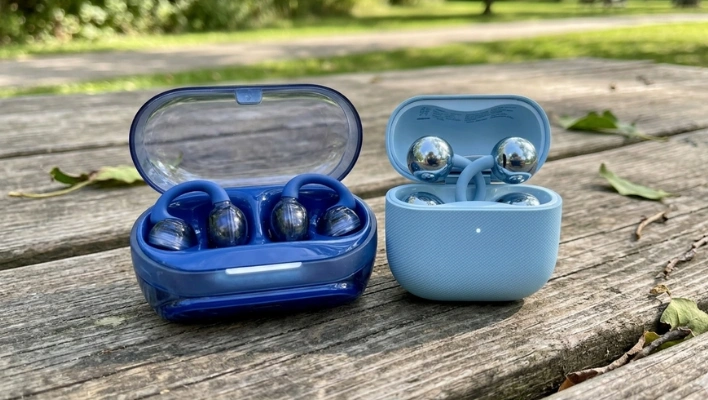
I’ve had the chance to try out both the JBL SoundGear Clips and the Huawei FreeClip 2, and the first thing that struck me was just how comfortable they are.
You can wear either of these for hours without experiencing that annoying ear fatigue that often comes with traditional in-ear earbuds.
But comfort is just the tip of the iceberg, I have plenty more to share beyond that. If you’re feeling torn between these two models, you’re definitely not alone.
At first glance, they might seem quite similar with their open-ear clip design, but once you start using them regularly, the differences really start to stand out.
From the design of the case and the features offered to battery life and sound quality, each one caters to a slightly different type of user.
So instead of just throwing specs at you, I’m going to break it down based on real-life usage, what truly matters when you’re living with them day in and day out, and which one might be a better fit depending on how you plan to use your earbuds.
Look & Feel
You can spot the differences right from the moment you pick them up.
The Huawei FreeClip 2 seems to be designed with everyday life in mind. Its case is compact, lightweight, and genuinely fits in your pocket without a fuss. You don’t even think about it—you just carry it along.
JBL, however, takes a different route. The clear lid and bold design give the SoundGear Clips a standout appearance, and honestly, they really do grab attention. But the case is larger, and that can become a bit of a hassle over time.
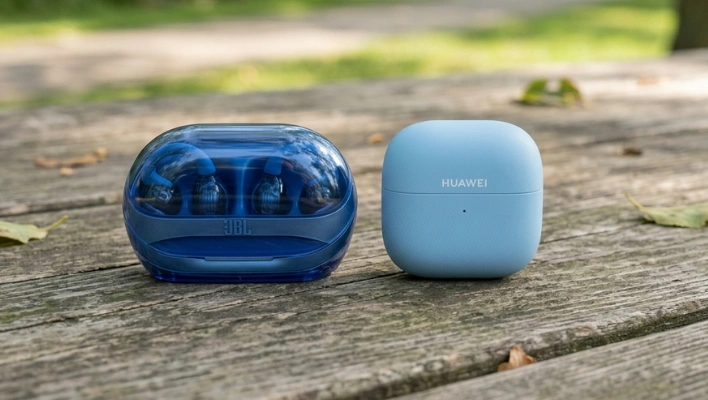
Huawei also gets the small usability features just right. You can place either earbud in either side of the case, and it connects instantly. There’s even a physical button for pairing, which makes switching devices a breeze.
JBL keeps it more classic—left goes in the left side, right in the right, and pairing is done with touch gestures. It works, but it’s not as seamless.
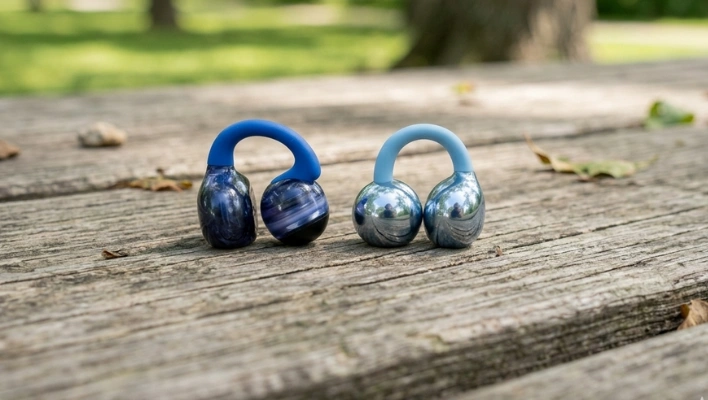
As for comfort, both are fantastic. Once they’re on your ears, the differences fade away. You can wear either for hours without any discomfort, whether you’re working, walking, or just taking it easy.
Features & Everyday Experience
Huawei features wear detection, which means your music automatically pauses as soon as you take the earbuds out. It’s one of those conveniences that you don’t appreciate until you try a pair that lacks it. JBL doesn’t have this feature, and you’ll notice it for sure.
When it comes to customization, Huawei offers a lot more flexibility. You can adjust gestures to your liking, while JBL keeps things simpler and more set in stone. It’s not a dealbreaker, but if you enjoy personalizing your controls, Huawei gives you that extra space to play around.
Plus, there’s a bit of an edge in durability. Huawei has an IP57 rating, while JBL sits at IP54. In real-world use, both can handle workouts without any issues, but Huawei just feels a touch more rugged.
Connectivity & App Support
Both earbuds cover the basics nicely—stable connections, low latency, and multipoint pairing are all included. Whether you’re switching from your phone to your laptop or enjoying some videos, you won’t face any hassles.
Huawei does have a slight advantage with its newer Bluetooth standards and the L2HC codec (if you have compatible Huawei devices), but for most users, both earbuds stick to AAC and perform quite similarly.
App support is solid on both ends. The Huawei AI Life app and JBL Headphones app provide EQ controls, gesture settings, and device tracking. Huawei adds a little extra with adaptive audio tuning that adjusts the sound based on your environment—it’s a subtle feature, but definitely useful.
JBL counters with Google Fast Pair, which makes setup on Android devices nearly instantaneous. It’s a small win, but a nice touch.
Sound Quality
This is where the real distinction becomes clear—and where your personal preferences really come into play.
JBL delivers its signature sound: punchy bass, vibrant energy, and an overall fun listening experience. If your music taste skews towards electronic, hip-hop, or anything with a heavy bass line, you’re likely to fall in love with these right off the bat.
On the other hand, Huawei takes a different route. The FreeClip 2 offers a more balanced sound profile, with clearer mids and a stronger vocal presence. This tuning is versatile enough to shine across various genres—whether it’s podcasts, acoustic melodies, pop, or even classical pieces.
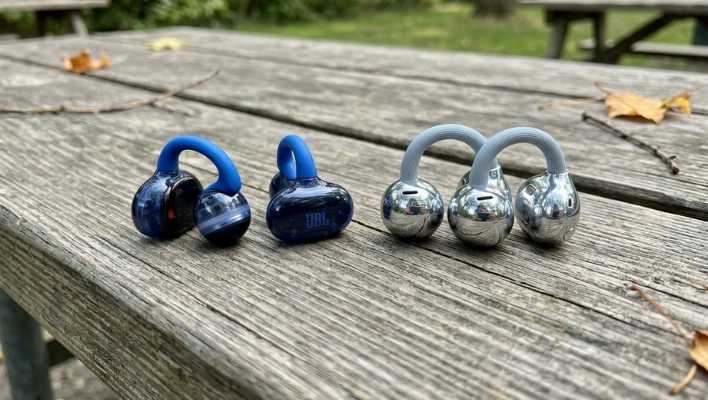
Neither option features active noise cancellation, and that’s intentional. These are open-ear earbuds, designed so you can stay aware of your surroundings. They’re perfect for working from home, commuting, or exercising outdoors where being aware of your environment is key.
However, if you prioritize overall clarity and balance, Huawei has the edge. The difference isn’t huge, but it’s definitely noticeable—especially during longer listening sessions.
Call Quality
Surprisingly, the call performance is quite close.
Both earbuds manage to pick up voices clearly, even when you’re outside. They both do a solid job of reducing background noise, but Huawei has a slight advantage in busier places. Voices come through a bit more clearly, with less ambient noise interfering.
Still, this isn’t an area where either one really struggles—you can easily take calls on both without any issues.
Battery Life & Charging
When it comes to battery performance, both are pretty reliable, but Huawei goes a little further.
The FreeClip 2 provides roughly 9 hours of playback on a single charge, and with the case, it can last up to about 38 hours.
JBL, on the other hand, offers around 7 to 8 hours per charge, which is still quite good, but not quite as impressive.
What makes Huawei stand out is its convenience factor. It supports wireless charging, while JBL sticks to USB-C. If you already have wireless chargers at home, that’s a pretty nice upgrade.
Pricing
The JBL SoundGear Clips is more on the affordable side. It usually starts at around $149, but in practice, you can often snag it for about $110 to $130, which makes it a great value for what it delivers.
On the other hand, the Huawei FreeClip 2 is seen as the more premium option. It officially retails for about $199, but in many places, it tends to hover between $170 and $220, depending on discounts and availability.
In simple terms, you’re typically looking at a difference of $40 to $80 between the two.
JBL SoundGear Clips vs Huawei FreeClip 2: Specs Comparison
| Category | JBL SoundGear Clips | Huawei FreeClip 2 |
|---|---|---|
| Design Type | Open-ear clip design | Open-ear clip (C-bridge design) |
| Driver | 11mm dynamic driver | 10.8mm dual-diaphragm driver |
| Bluetooth | Bluetooth 5.4 | Bluetooth 6.0 |
| Codec Support | AAC, SBC | AAC, SBC (L2HC on Huawei devices) |
| Battery (Earbuds) | Up to 8 hours | Up to 9 hours |
| Total Battery (Case) | Up to 32 hours | Up to 38 hours |
| Charging | USB-C | USB-C + Wireless charging |
| Water Resistance | IP54 | IP57 (earbuds) |
| Weight (Earbud) | ~6.5g each | ~5.1g each |
| Microphones | 4-mic with AI noise reduction | Multi-mic with noise cancellation |
| Special Features | OpenSound, Adaptive Bass Boost, Fast Pair | Adaptive audio, wear detection, multipoint |
Which One Should You Actually Buy?
If you’re looking to stretch your dollars, the JBL SoundGear Clips are a solid choice. They’re enjoyable, dependable, and come at a much lower price point.
However, if you value the overall experience—the finer details, the ease of use, and the sound quality—the Huawei FreeClip 2 stands out as the superior option.
It’s not a night-and-day difference, but it’s consistently better in ways that become apparent the longer you use them.
And that’s really what this comparison boils down to.
Best Deal:
- JBL SoundGear Clips: View on AliExpress
- Huawei FreeClip 2: View on AliExpress

Nick, the Co-founder of Earbuds Arena, is a seasoned freelance tech journalist with over ten years of experience covering wearables, apps, headphones, and gadgets. When he’s not immersed in the tech world, you’ll likely find him unwinding with video games, going for a run, or enjoying a game of soccer on the field.